Good shade does two jobs at once: it makes an outdoor space usable when the sun is fierce, and it protects the people in it. Whether you’re shading a school play area or a backyard deck, choosing the right outdoor shade solution follows the same logic. The decision gets much easier when you work through it in order: how the space is used, what your options are, whether you need something permanent, and how to build it to last.


The right outdoor shade solution starts with how you use the space
Before comparing products, get clear on what the space is for and who uses it. That single question narrows the field faster than any catalogue. A backyard built for entertaining has different needs from a schoolyard full of running children, which is different again from a childcare play area. Ask yourself:
- Who uses it, and when? Adults relaxing on weekends, or children outdoors every day at the hottest times?
- Does the shade need to be there year-round, or only in summer?
- How big is the area, and does the whole space need cover or just part of it?
- Does it need to handle wind, rain and heavy daily use?
A backyard might be well served by something adjustable you can pack away in winter. A school or early-learning setting almost always needs permanent, durable cover that protects children every day of term. The budget conversation flows naturally from there: a movable umbrella and an engineered, council-approved structure sit at very different price points and knowing which one the space actually calls for stops you over- or under-spending. Answer the use-case first, and the rest of the decision gets much simpler.
Know your options – from shade sails to built structures
Outdoor shade comes in a wide range of forms, and each has its strengths. The main options worth knowing:
- Shade sails. Tensioned fabric stretched between posts. Affordable, flexible and good for covering large or oddly shaped areas, making them a common choice for schoolyards and play spaces.
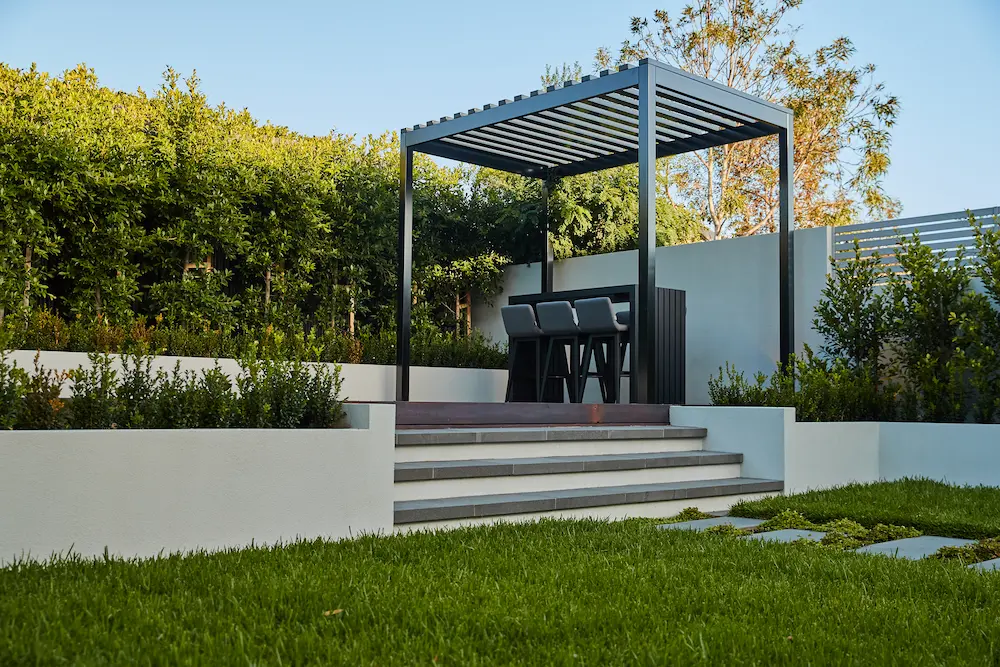
- Pergolas. Fixed timber or steel frames, left open, planted with climbers, or topped with a solid or louvred roof. A popular, good-looking option for backyards that doubles as a design feature.
- Awnings. Wall-mounted and often retractable, so you can pull shade out over a deck or patio when you need it and retract it when you don’t.
- Umbrellas and freestanding canopies. The easy, movable option for smaller backyard settings.
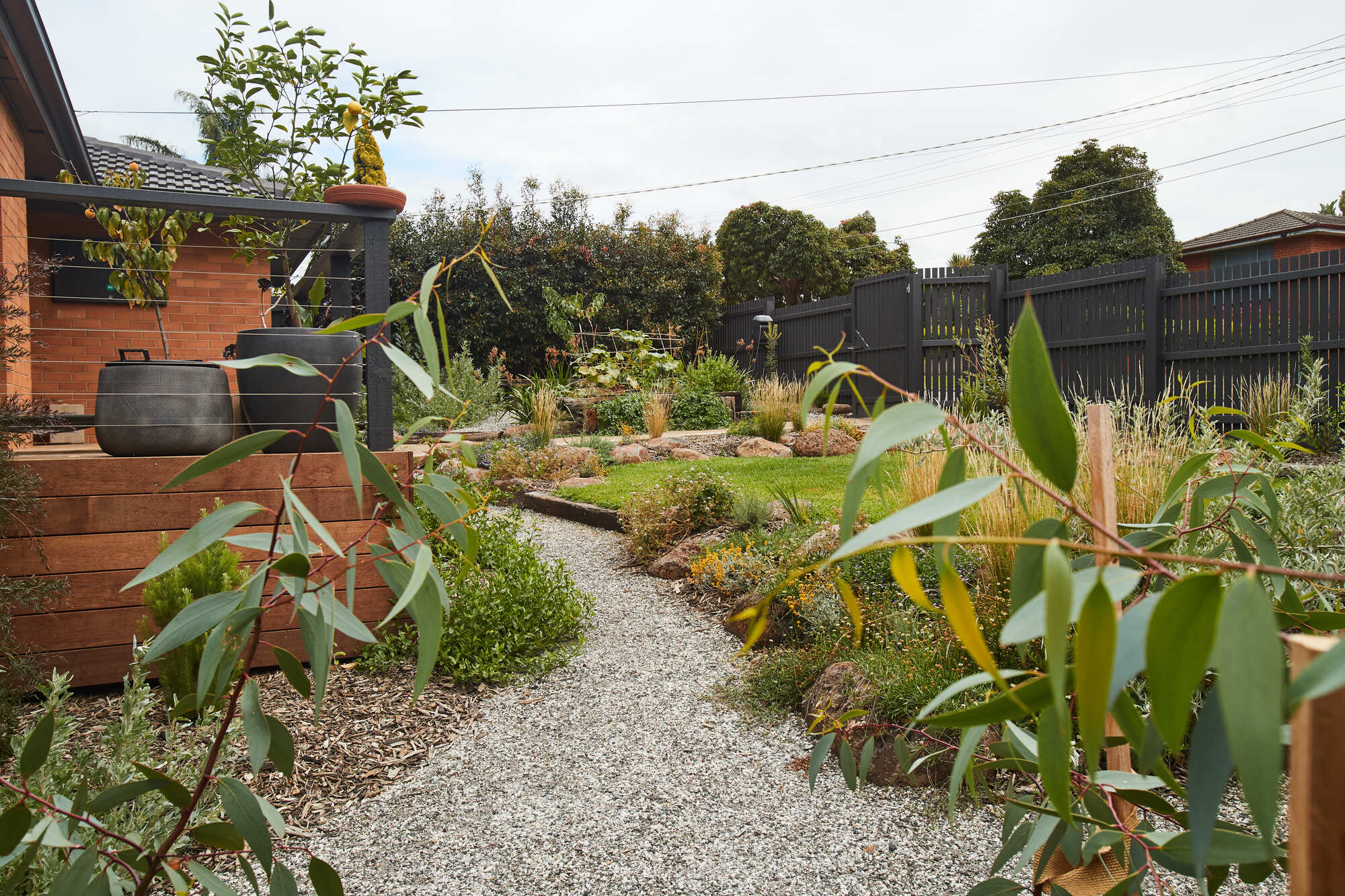
- Natural shade. Well-placed trees and large plantings. Slow to establish but cooling, beautiful and low-cost over time, and they bring the added benefit of greenery.
- Permanent built structures. Custom roofed shelters and shade structures designed and constructed for the site. The most durable and hard-wearing choice, and the standard for schools and public play areas.
There’s no single best answer – the right pick depends on the use-case you defined above, your budget and how long you need it to last. Many spaces end up combining a couple of these, such as a built structure over the main gathering area and a tree or two softening the edges.
Permanent vs temporary – matching the structure to the setting
One of the biggest decisions is whether you need shade that’s fixed in place or shade you can move and adjust. The setting usually decides for you.
In a backyard, flexibility is often welcome. A retractable awning or market umbrella lets you choose sun or shade depending on the day and season, and it suits spaces used on and off. Temporary and adjustable options also tend to cost less upfront and rarely need approvals, which makes them an easy first step.
Schoolyards and childcare settings sit at the other end. These spaces need shade that’s reliable, hard-wearing and there every day without being set up or taken down. Permanent shade sails and built structures are the norm because they cover large areas, stand up to constant use, and can be engineered to meet the safety and wind-load requirements of public and education sites.
There’s also a maintenance angle: a fixed structure built once and maintained occasionally is far less work over its life than fabric covers that have to be put up, taken down and stored each season. If children rely on the shade daily, permanent almost always wins.


Sun protection matters most where children play
Shade isn’t only about comfort. In a country with very high UV levels, well-designed shade is a genuine sun-safety measure – and that matters most in the places where children spend hours outdoors.
A few principles make shade work harder as sun protection:
- Cover the times that matter. The sun is harshest at midday, so shade needs to fall where children actually play during those hours.
- Mind the angle. The sun moves across the day and the seasons, so shade that works at noon may leave an area exposed mid-afternoon. Orientation and size both counts.
- Choose the right fabric. Shade-cloth products carry UV-protection ratings, so the material itself affects how much sun it blocks, not just the area it covers.
- Think about reflected sun too. Light bounces off paving, water and light-coloured walls, so positioning shade well means looking at more than just the patch directly overhead.
For schools and early-learning centres, treating shade as part of a broader sun-safety approach – alongside hats, timing of outdoor activities and sunscreen – is the sensible standard, and it’s often the first thing parents and staff notice about a well-run outdoor area.
Build it to last – materials, durability and compliance
Shade in a high-use outdoor space takes a beating from sun, wind and constant traffic, so build quality decides how long it lasts and how safe it stays.
Materials each behave differently. Quality shade cloth resists UV breakdown and comes in a range of densities. Steel framing offers strength for larger permanent structures. Timber suits backyard pergolas and a softer look. Polycarbonate and solid roofing add rain cover as well as shade. The right combination depends on the span, the setting and the weather it must handle.
Permanent structures also bring practical requirements. Larger builds may need engineering for wind loads, proper footings, and in many cases council approval or a permit – particularly on school and public sites. Skipping these steps is where cheap shade gets expensive: a structure that fails in a storm or can’t pass inspection costs far more to fix than to build the first time properly. This is where professional landscape construction separates shade that lasts a season from shade that lasts decades.


Getting your shade designed and built
Whether it’s a school or early-learning play area or a backyard you want to use in summer, the best results come from designing the shade into the space rather than bolting it on afterwards. Thinking about it early means the shade works with the layout, the planting and the way people move through the area, instead of looking like an afterthought.
Talk to Great Spaces about designing and building the right shade for your space.